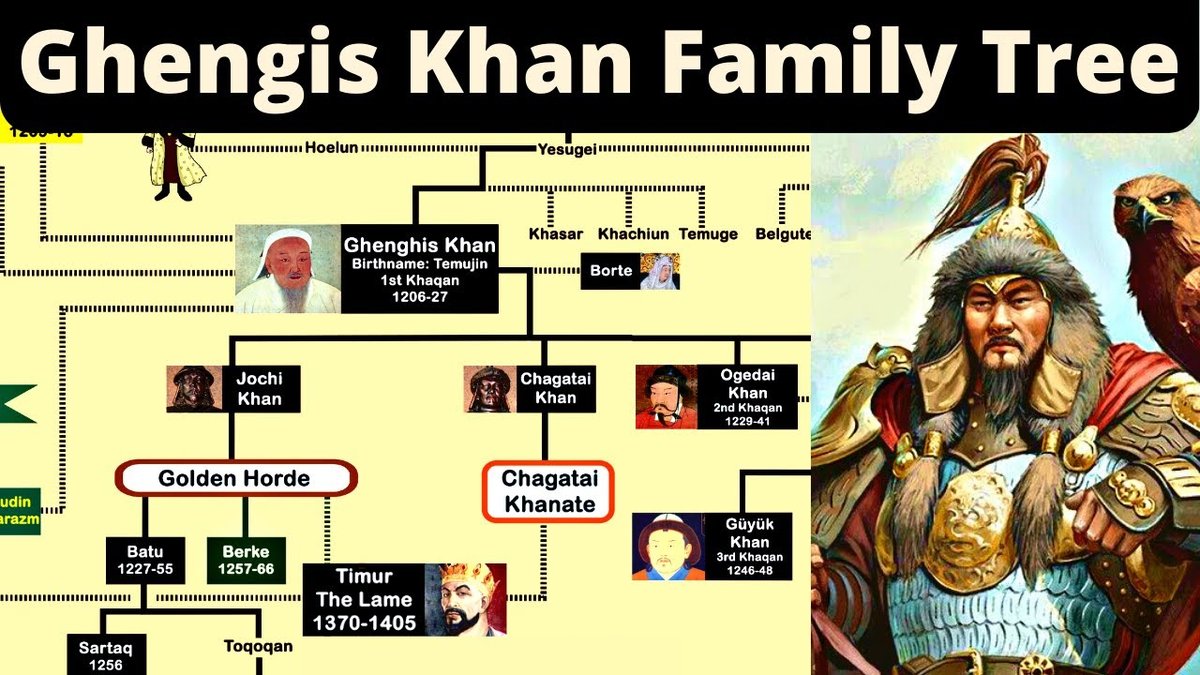
Genghis Khan's Children Divided and Forged the Mongol Empire
The name Genghis Khan conjures images of a singular, unstoppable force, a legendary figure who united disparate steppe tribes and unleashed an empire stretching across continents. Yet, the story of his incredible legacy, and the very shape of the world that followed, is intrinsically tied to the complex saga of Succession and Division: How Genghis Khan's Children Shaped the Mongol Empire. It wasn't just Genghis Khan who built this monumental realm; it was his remarkably capable, and often fiercely competitive, offspring who solidified, expanded, and ultimately redefined its vast territories.
They didn't just inherit land; they inherited a vision and the formidable machinery of Mongol power. What began as a strategic delegation of authority soon evolved into distinct khanates, each leaving an indelible mark on the regions they governed, from the frozen steppes of Russia to the bustling markets of China.
At a Glance: The Children Who Forged an Empire
- Genghis Khan's Initial Plan: He divided his empire into "ulus" (land grants) among his four principal sons to ensure regional stability under a single Great Khan.
- The Four Pillars: His sons Jochi, Chagatai, Ögedei, and Tolui each received a key territory, becoming the anchors of the dynasty.
- Daughters' Diplomatic Role: Women like Alaqai Bekhi secured frontiers and facilitated trade through strategic marriages.
- Ögedei, the Second Great Khan: Hand-picked by Genghis, Ögedei significantly expanded the empire, established Karakorum, and standardized administration.
- The Rise of Distinct Khanates: After Ögedei's death, internal rivalries and a brutal civil war led to the splintering of the empire into the Golden Horde, Chagatai Khanate, Ilkhanate (Tolui's lineage), and the Yuan Dynasty (Kublai Khan).
- The Pax Mongolica: Despite internal struggles, the Mongol legacy included secure trade routes (Silk Roads), religious tolerance, and vast cultural exchange facilitated by the Yassa legal code.
- Modern Echoes: Genghis Khan's genetic signature is still found in a significant portion of the world's male population, connecting many to this incredible lineage.
The Architect's Blueprint: Genghis Khan's Vision for Succession
Born Temüjin around 1162, Genghis Khan was far more than a military genius. He was a shrewd statesman who understood the critical importance of a stable succession plan for his nascent empire. In 1206, after being proclaimed "Universal Ruler" at a massive kurultai (steppe council), he turned his attention to institutionalizing his family's rule.
His principal wife, Börte, bore him four sons who would become the linchpins of his dynasty: Jochi, Chagatai, Ögedei, and Tolui. Before his death in 1227, Genghis strategically assigned each son an ulus, a land grant representing a share of the empire. This initial division wasn't intended to fracture his meticulously built empire, but rather to delegate regional authority and ensure a stable transition under a unified Great Khan.
Beyond his sons, Genghis Khan also leveraged his daughters as powerful diplomatic assets. Women such as Alaqai Bekhi and Checheyigen were married to frontier kings, acting as vital links in the empire's network. These "princesses who ruled" collected taxes, governed towns, and guaranteed peace, serving as crucial pillars for the empire's stability and expanding trade networks. They were not merely pawns but active participants in the grand Mongol design.
The Four Pillars: How Genghis's Sons Forged Their Own Paths
Each of Genghis Khan's four principal sons inherited a unique geographical and political challenge, shaping their ulus in distinct ways. Their individual strengths and, at times, their rivalries, laid the groundwork for the future diversity of the Mongol Empire. Learn about Genghis Khans children and their unique contributions.
Jochi: The Western Steppes and the Golden Horde
Jochi, the eldest son, faced questions regarding his legitimacy, a shadow that would subtly influence the dynamics between the brothers. His domain encompassed the vast western steppes, a territory that would become the foundation for the formidable Golden Horde. Through his energetic son Batu Khan, the Golden Horde would dominate Eastern Europe and Russia for centuries, leaving an indelible mark on Russian politics and culture. Batu's relentless campaigns overran Kievan Rus', effectively shaping the region's development for over 250 years through a system of tribute and political influence. The khans of the Golden Horde ensured safe passage for merchants, linking distant trade centers and contributing to the economic vitality of the western Silk Roads.
Chagatai Khan: The Guardian of the Yassa in Central Asia
The second son, Chagatai Khan, was renowned for his unwavering and often strict adherence to the Yassa, the comprehensive legal code governing Mongol life, warfare, and administration. He was entrusted with the crucial region of Central Asia, which became the Chagatai Khanate. Here, he diligently enforced the Yassa, ensuring the safety of caravan trails—a lifeline for the empire's economy. His rule fostered a fascinating blend of Mongol, Turkic, and Persian traditions, laying the groundwork for a culturally rich region where later heirs would adopt Islam and fund scholars in vibrant cities like Samarkand.
Ögedei Khan: The Great Khan's Chosen Successor and Architect of Expansion
Ögedei, the third son, was personally selected by Genghis Khan to succeed him as the second Great Khan. His reign, beginning in 1229, marked the empire's greatest territorial extent. He pushed Mongol conquests deeper into Eastern Europe, with raiding parties reaching Hungary, and completed the long, arduous subjugation of the Jin Dynasty in northern China.
More than just a conqueror, Ögedei was a visionary administrator. He established Karakorum as the permanent capital, transforming it from a nomadic encampment into a central hub. He vastly expanded the efficient Yam, the Mongol postal system, which used relay stations and fresh horses to transmit information rapidly across the empire. Ögedei also implemented a standardized tax system, replacing the ad-hoc levies of earlier conquests, which brought greater stability and predictability to the imperial coffers. He initiated early tests of paper money and opened market squares, demonstrating a forward-thinking approach to economic development.
Tolui: The Heartlander and Father of Future Great Khans
Tolui, the youngest son, was a brilliant military commander who held a special place in Genghis Khan's heart. He inherited the Mongol heartland itself, watching over Mongolia and the core territories. While he never became Great Khan himself, his influence was profound through his sons. Möngke Khan and, most famously, Kublai Khan, would later claim the emperorship, profoundly shaping the empire's direction and leading to its transformation into a more settled, bureaucratic state, particularly in China.
Beyond the Patriarchs: Grandchildren, Regents, and Unforgettable Figures
The children of Genghis Khan set the stage, but it was their descendants who truly brought the Mongol legacy to its complex zenith. These figures cemented the empire's power, expanded its reach, and left enduring cultural and scientific achievements.
- Batu Khan (Jochi's son): As mentioned, he led the devastating campaigns that overran Kievan Rus' and solidified the Golden Horde, demanding tribute from Russian princes for centuries and reshaping Eastern European politics.
- Hulagu Khan (Tolui's son): A formidable military leader, Hulagu stormed the infamous Assassin fortress of Alamut and, in 1258, sacked Baghdad, bringing an end to the venerable Abbasid Caliphate. His campaigns founded the Ilkhanate in Persia and the Middle East, a realm where he invited astronomers to the Maragheh observatory, fostering scientific advancement.
- Kublai Khan (Tolui's son): The most famous of Genghis's grandsons, Kublai proclaimed the Yuan Dynasty in 1271, establishing Mongol rule over all of China. He moved the capital to Beijing (Khanbaliq), welcomed legendary travelers like Marco Polo, pioneered the widespread printing of paper money, and issued bamboo letter passports along the Silk Roads to facilitate trade. Chinese sources, contrary to some pop culture depictions, often praise his efforts in disaster relief and governance.
- Möngke Khan (Tolui's son): Prior to Kublai, Möngke served as Great Khan, known for his administrative reforms. He standardized weights and measures, tightened tax law, and launched ambitious military campaigns, including those led by his brothers Hulagu and Kublai.
- Ariq Böke (Tolui's son): Möngke's younger brother, Ariq Böke, battled Kublai for the throne in a bitter civil war after Möngke's death. This conflict profoundly weakened the concept of a unified Great Khan, accelerating the empire's fragmentation.
- Töregene Khatun (Ögedei's widow): A powerful and ambitious woman, Töregene Khatun ruled as regent for five years after Ögedei's death, skillfully navigating the treacherous political landscape and holding the empire together until the election of Güyük Khan.
- Sartaq (Batu's grandson): A Christian grandson of Batu, Sartaq fostered early East-West diplomacy, showcasing the religious tolerance often seen within the Mongol Empire.
- Khutulun (Great-great-granddaughter): A legendary figure, this warrior princess was famed for her wrestling prowess, reportedly demanding 100 horses from any man she defeated in a match—a testament to the independent spirit of some Mongol women.
The Mongol Operating System: Yassa and the Pax Mongolica
At the heart of the Mongol Empire's function, regardless of which khanate was in charge, was the Yassa. This was a remarkably flexible yet comprehensive legal code that outlawed offenses like theft, adultery, and lying. Penalties were swift, often severe, but applied with a notable even-handedness, transcending tribal distinctions.
The Yassa provided the bedrock for what historians call the Pax Mongolica, an era of relative peace and stability across Eurasia. This period ushered in unprecedented benefits for merchants traversing the Silk Roads. They enjoyed safe roads, significantly lower costs (taxes were often as low as 2% for caravans), and received official passports facilitating travel. The sophisticated Yam postal system wasn't just for official communication; it also provided relay stations with fresh horses and armed escorts, making long-distance trade faster and more secure than ever before.
Religious leaders, too, benefited immensely. They gained full freedom of worship and exemption from taxes, provided they prayed for the prosperity of the empire. This policy led to a flourishing of diverse religious practices, with Buddhist, Muslim, and Christian shrines existing side-by-side, fostering an environment of surprising intellectual and spiritual exchange.
The Global Exchange: Reshaping the Silk Roads and Beyond
The Mongol Empire didn't just facilitate trade; it supercharged it. The secure environment of the Pax Mongolica allowed for an unprecedented exchange of goods, ideas, and technologies across the vast Eurasian landmass.
- Technology Transfer: Gunpowder recipes and printing techniques moved westward, while sophisticated Persian algebra, advanced papermaking methods, and intricate star charts flowed eastward into China.
- Medical Innovation: Medical practices from China, Persia, and the Middle East merged, leading to new treatments and understandings.
- Cultural Blending: Food customs transformed—dumplings became popular in Persia, while saffron found its way into Chinese cuisine. Clothing styles blended, creating new fashions that swept across regions.
- Geographic Knowledge: Muslim geographers, benefiting from the extensive Mongol information networks and maps, were able to sketch the first accurate outlines of Korea, demonstrating the vast reach of imperial intelligence.
This era saw trade volume triple, dismantling centuries-old East-West knowledge barriers and creating a truly interconnected world long before the age of sail.
The Cracks Emerge: Civil War and the Rise of Distinct Khanates
While Genghis Khan's initial division aimed for stability, the unity proved fragile after Ögedei's death. The ambitious grandsons of Genghis Khan, each commanding vast resources and powerful armies, began to quarrel fiercely over succession to the Great Khanate. This internal strife escalated into a brutal civil war, most notably the conflict between Kublai Khan and his brother Ariq Böke.
This period of conflict ultimately splintered the realm into four distinct and largely independent khanates:
- The Golden Horde: Retained control over the western steppes and Russia.
- The Chagatai Khanate: Dominated Central Asia.
- The Ilkhanate: Established in Persia and the Middle East by Hulagu Khan (Tolui's lineage).
- The Yuan Dynasty: Founded by Kublai Khan in China (also Tolui's lineage), which also held the traditional Mongol heartland.
These four khanates continued to trade vigorously, leveraging the infrastructure of the Silk Roads, but they seldom recognized a single master again. Each developed its own unique cultural identity, administrative style, and political trajectory, forever changing the map of Eurasia.
For context, consider the rapid pace of their initial expansion:
- 1206 – 1227: Genghis defeats steppe rivals, attacks the Jin frontier, pushes into Persia.
- 1229 – 1241: Ögedei Khan conquers Kaifeng, crosses the Amu Darya, and raids Hungary.
- 1237 – 1259: Batu Khan overruns Kievan Rus’, molds the Golden Horde, and demands silver from Russian princes.
- 1256 – 1260: Hulagu Khan storms Alamut, sacks Baghdad, and ends the Abbasid Caliphate.
- 1271 – 1294: Kublai Khan proclaims the Yuan Dynasty, rules all of China, and sends fleets toward Japan.
Your Own Mongol Connection: Tracing Ancestry to the Universal Ruler
The enduring legacy of Genghis Khan isn't just in history books; it might be in your very DNA. A groundbreaking 2003 genetics study revealed that approximately 1 in 200 men worldwide carries a specific Y-chromosome signature, likely originating from Genghis Khan's Borjigin clan. This genetic marker, passed strictly from father to son, is a powerful testament to the widespread impact of the Mongol lineage.
If you're curious about your potential connection, here's how you can embark on your own genealogical quest:
Proving Descent from Genghis Khan (The Male Line)
- Chart Your Male Line: Start by meticulously documenting your direct male line: your father, your father's father, and so on, as far back as you can go. Use birth and marriage certificates to ensure accuracy.
- Order a Y-DNA Test: Purchase a Y-DNA test from reputable providers like FamilyTreeDNA or Ancestry. If you are female, have a direct male relative (father, brother, paternal uncle, paternal grandfather) take the test.
- Download and Upload Raw Data: Once results are ready, download your raw DNA data and upload it to platforms such as Ancestry, FamilyTreeDNA, GEDmatch, and Genomelink. These platforms allow for broader comparisons.
- Look for the "Star-Cluster" Haplotype: Analyze your Y-DNA results for the specific "star-cluster" haplotype, a set of short tandem repeats (STRs) commonly found in men of the Borjigin clan. Genetic genealogists can assist in interpreting these complex results.
- Correlate DNA with Documents: Link your DNA clues with traditional genealogical documents—probate files, land deeds, census sheets, and historical records that might trace your male line back to Central Asia or Eastern Europe.
- Maintain Clear Source Notes: Document every piece of information and its source meticulously. This is crucial for verifying your findings and for future researchers.
- Consider Autosomal DNA for Other Lines: If your Y-DNA doesn't match the Borjigin cluster, don't despair. Your descent could be through a daughter or granddaughter of Genghis Khan's lineage. Autosomal DNA tests (available from most major providers) can reveal genetic connections across all ancestral lines, though tracing specific individuals is more challenging.
Building Your Own Family Tree (Seven Practical Steps)
Regardless of a Mongol connection, building a family tree is a rewarding journey.
- Start with What You Know: Begin with yourself, your parents, and grandparents. Gather names, birth/marriage/death dates, and places from family photographs, Bibles, and oral histories.
- Search Multiple Databases: Don't rely on just one source. Search at least two major genealogical databases for every ancestor (e.g., Ancestry and FamilySearch). Each platform has unique records.
- Save Your Records: Take digital pictures or screenshots of every record you find (birth certificates, ship passenger lists, tax rolls, census records). Organize them systematically.
- Enter Facts and Sources: Use your chosen family tree software to enter facts. Keep entries concise, use short sentences, and, most importantly, cite your sources for every piece of information.
- Order DNA Kits: Order DNA kits for both male-line (Y-DNA) and autosomal tests. These can confirm paper trails and uncover previously unknown relatives.
- Join Forums and Groups: Engage with surname-specific or regional genealogical forums and social media groups. They are invaluable for swapping leads, debating conflicting information, and finding living cousins who might share research.
- Review Annually: Genealogy is an ongoing process. Annually review your sources, merge any duplicate entries, fix spelling errors, and remember to credit others who have helped your research.
Top Family Tree Builder Options
- Ancestry®: Boasts over thirty billion records and the largest cousin network, with helpful "hint leaves" to guide your research.
- MyHeritage: Strong on non-US archives, offers automatic photo colorizing, and easy tree exports for sharing.
- Genomelink: Accepts raw DNA files from other providers, highlights ancient traits, and can flag specific steppe markers relevant to Mongol ancestry.
- FamilySearch: A free, crowd-edited, and ad-free platform maintained by the Church of Jesus Christ of Latter-day Saints, with a massive collection of digitized records.
- GEDmatch: A free "lab" for cross-comparing raw DNA files from various providers, often used by advanced genealogists to find distant matches.
Debunking Myths and Modern Mongolia
The Mongol Empire, with its vast scale and dramatic conquests, has naturally generated its share of myths. Separating fact from fiction helps us appreciate the true ingenuity and complexity of this historical force.
- Myth 1: Every Mongol soldier was a ruthless, indiscriminate killer.
- Fact: While Mongol warfare was undeniably brutal, harsh discipline was often imposed to limit random violence. This was particularly true in areas slated for long-term integration or trade, where protecting infrastructure and future tax revenue was paramount.
- Myth 2: Genghis Khan's armies relied solely on cavalry and archery.
- Fact: Mongol military prowess went far beyond horsemen. Their engineers were highly skilled, building catapults, trebuchets, and siege tunnels to conquer fortified cities. They also utilized pontoon bridges for river crossings and adapted new technologies from conquered peoples.
- Pop culture often pictures Kublai Khan as a cruel, absolute tyrant.
- Fact: While a powerful ruler, contemporary Chinese sources frequently praise Kublai Khan for his administrative capabilities, his efforts in disaster relief, and his patronage of the arts and sciences. His reign was seen by many as a period of stability and prosperity in China.
Today, the spirit of Genghis Khan and the legacy of the empire continue to resonate in Mongolia. Visitors can still ride horses across the vast steppes near Khentii Province, sleep in traditional felt yurts, and marvel at the giant steel statues dedicated to Genghis Khan. The capital city of Ulaanbaatar hosts the annual Naadam festival, a vibrant celebration of traditional Mongol sports: wrestling, archery, and horse racing, reflecting skills that were central to the empire's rise.
Glossary of Key Terms
- Great Khan: The supreme ruler of the united Mongol nation.
- Ulus: A land grant or territory held by one royal branch of the Mongol ruling family.
- Y-DNA: Genetic markers passed strictly from father to son, used to trace direct male lineage.
- Silk Roads: A network of ancient trade routes linking East Asia with the Mediterranean world, revitalized and protected by the Mongol Empire.
- Family-tree chart: A diagram illustrating parents, children, and spouses across multiple generations of a family.
- History of the Mongols: The academic field dedicated to studying the origins, conquests, culture, and enduring legacies of the Mongol people and their empire.
The incredible saga of Genghis Khan's children is a testament to the dynamic interplay of ambition, strategy, and cultural exchange. Their actions, both unified and fragmented, didn't just divide an empire; they actively forged the diverse, interconnected world that followed, leaving an imprint that echoes even in our modern understanding of global history and, for some, in their very DNA.