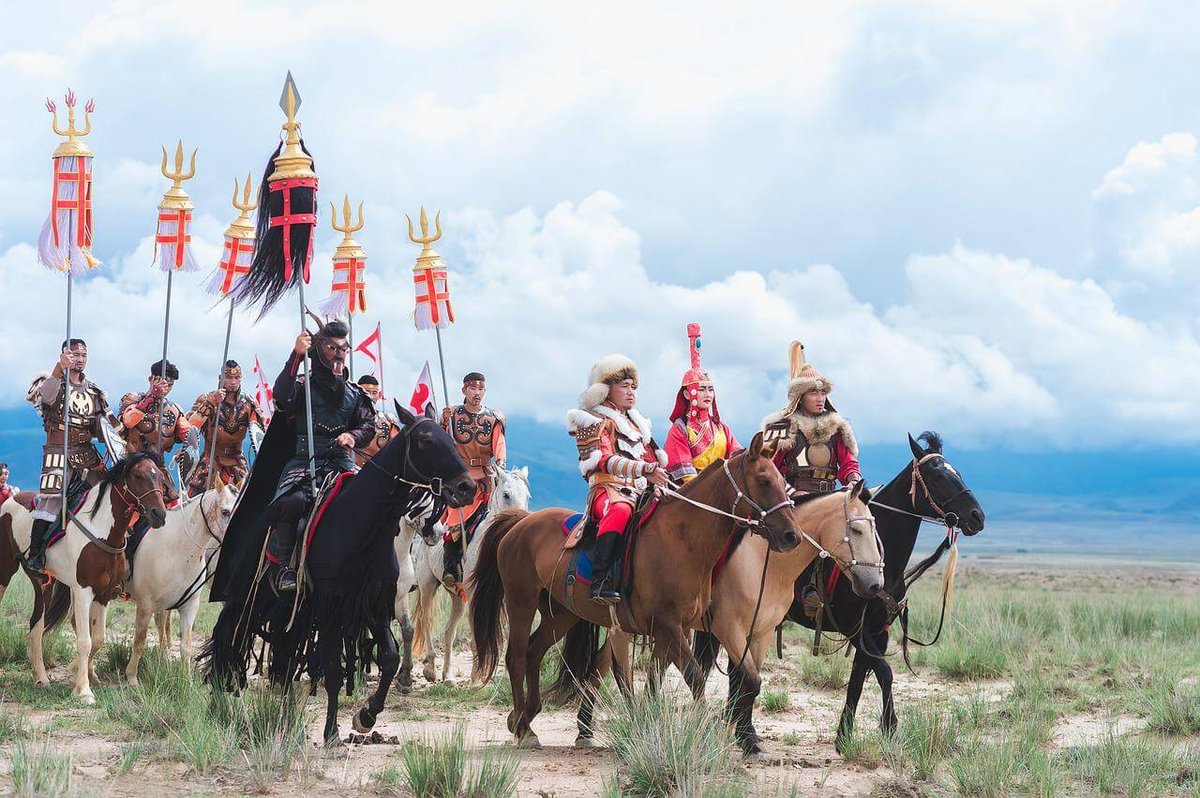
Imagine a lineage so vast, so impactful, that its genetic signature ripples through nearly eight percent of the global male population today. This isn't a myth or a legend, but a scientific reality attributed to one of history's most formidable figures: Genghis Khan. Nearly 800 years after his death, a 2003 genetic study unveiled an astonishing truth – an estimated 500 million men alive today carry a distinct Y-chromosome lineage directly tracing back to the legendary Mongol conqueror. This isn't just a historical curiosity; it's a living testament to the unparalleled scale of his empire and the enduring power of his family.
Genghis Khan, born Temüjin, was far more than a warrior. He was a strategic genius who unified disparate Mongol tribes in 1206, forging the largest contiguous land empire the world has ever seen. From humble beginnings, abandoned by his tribe, he rose through sheer will and military prowess, leading campaigns that stretched across Asia, leaving an indelible mark on civilizations from China to Eastern Europe. His empire, built on formidable cavalry, tactical brilliance, and a reputation for ruthless efficiency, shaped the course of human history in profound ways. His direct descendants, his children, were instrumental in this expansion, carrying his legacy and ambition to every corner of their vast dominion.
The Unseen Thread: Tracing a Genetic Dynasty
The very idea that a single man from the 12th century could have such an extensive genetic footprint is breathtaking. The 2003 study specifically identified a Y-chromosome haplogroup that originated in Mongolia around 1,000 years ago, matching the estimated timeframe of Genghis Khan’s life and the subsequent rapid expansion of his empire. Because the Y chromosome is passed exclusively from father to son, it serves as an unmistakable genetic breadcrumb, marking the direct male line through generations. This genetic fingerprint is a powerful reminder of how deeply history is etched into our very DNA. To truly grasp the magnitude of this genetic inheritance, you'll want to Explore Genghis Khan's legacy. Uncover Genghis Khan's journey and how scientists continue to trace it.
The Mothers of an Empire: Genghis Khan's Wives and Concubines
Behind the vast empire and the sprawling lineage stood a multitude of women. Genghis Khan’s personal life was as strategic as his military campaigns, involving numerous wives and concubines who played vital roles in cementing alliances and providing heirs. His chief wife, Börte, married him young and became the mother of his four most significant sons, whose legitimacy was paramount for dynastic succession. These principal wives oversaw complex "Ordos" or courts, managing large households and exerting considerable influence. Understanding these relationships is crucial to appreciating the stability and expansion of the Mongol Empire. Dive deeper into the women who helped shape this formidable dynasty by reading about Genghis Khan's Wives: Mothers of his vast family.
Genghis Khan is documented to have had at least 44 wives and concubines, with estimates suggesting over 500 in total, many acquired through conquest. This extensive network of partners directly contributed to his remarkable number of children – at least 13 historically recorded, with traditional accounts claiming up to 120. This large family was not merely a matter of personal preference; it was a deliberate strategy to ensure a robust line of succession and expand the Mongol Empire's influence through marital bonds.
The Pillars of Power: Genghis Khan's Sons and Their Dominions
While Genghis Khan had several children, it was his four sons with Börte—Jochi, Chagatai, Ögedei, and Tolui—who were the foundational pillars of his burgeoning empire. Each was a formidable leader in his own right, entrusted with vast territories and significant portions of the army. Their combined efforts, even after their father's death, ensured the continued expansion and administration of the Mongol state.
- Jochi (1182–1227): The Western Frontier
Jochi, the eldest, commanded the western reaches of the empire. Despite lingering questions about his paternity due to Börte’s earlier capture, Genghis Khan accepted him, making him a critical general. His descendants would go on to establish the formidable Golden Horde, controlling much of Eastern Europe and Russia for centuries. - Chagatai (1183–1242): The Lawkeeper
Chagatai, the second son, was known for his adherence to the Yassa, Genghis Khan's written code of law. He inherited territories in Central Asia, forming the Chagatai Khanate, and ensured the strict enforcement of Mongol traditions and laws. - Ögedei (1186–1241): The Great Khan and Successor
Ögedei was chosen by Genghis Khan to succeed him as the Great Khan. His reign was marked by continued aggressive expansion, including the destruction of the Jin Dynasty and further pushes into Europe. His leadership solidified the Mongol Empire’s administrative structure and cemented its global dominance. - Tolui (1191–1232): The Heir of the Homeland
The youngest, Tolui, inherited the Mongol homeland and the largest part of the army, a testament to his father's trust. Though he did not rule as Great Khan, his sons, notably Möngke and Kublai Khan, would later ascend to the highest imperial offices, with Kublai Khan establishing the Yuan Dynasty in China.
These sons were not just inheritors; they were architects of the future. To fully appreciate their individual contributions, conquests, and the intricate web of their legacies, explore Genghis Khan's sons roles in shaping the post-Genghis era. Their decisions and rivalries profoundly influenced How Genghis Khan's children ruled the sprawling territories and how the empire ultimately divided.
The Diplomatic Hand: Genghis Khan's Daughters
While often less prominent in military chronicles, Genghis Khan’s daughters played an equally crucial, albeit different, role in consolidating the empire. Their marriages were strategic political alliances, hand-picked to secure loyalty, establish Mongol hegemony over conquered peoples, and maintain peace on crucial borders. Daughters like Alakhai Bekhi, for instance, became powerful regents, overseeing territories and promoting cultural exchange. These women were not mere pawns; they were diplomats and administrators in their own right, extending the Khan's influence through matrimonial ties. Discover the stories of these powerful women and their significant contributions by learning about The Daughters of Genghis Khan.
The sheer number of Genghis Khan's children, both sons and daughters, and their strategic placement throughout the nascent empire, ensured not just a continuation of his bloodline but a proliferation of his vision. Each child, in their unique way, carried forward the extraordinary legacy of the Universal Ruler, contributing to an empire whose influence resonated for centuries and whose genetic trace echoes in millions today. The story of Genghis Khan's children is truly the story of the Mongol Empire's unparalleled global reach.